Positioning, website clarity, value propositions and buyer confidence.
Read the main guide →BridgeHelix insights
Technical communication insights for science and engineering teams.
Evidence-led guides for technical companies and researchers who need practical answers without generic advice or weakened science.
Browse by problem
Five connected knowledge paths.
Each path connects specialist guidance with the service or industry page that can help implement it.
Search intent, topic clusters and useful technical articles.
Read the main guide →Evidence-led white papers, engineering case studies and scale-up claims.
Read the main guide →Water, biotechnology, pharma and engineering communication.
Read the main guide →Evidence matrices, research gaps, manuscript structure and ethical editing.
Read the main guide →All published guides
Start with the problem you are trying to solve.
 Technical Marketing
How to Write a Technical Comparison Page for Engineering Products
Write engineering product comparisons with matched conditions, traceable evidence and clear trade-offs that help technical buyers shortlist solutions.
Read the article → Academic Research
How to Write Research Highlights: Examples Without Overclaiming
Write research highlights with distinct findings, accurate conditions and journal character limits. Includes practical before-and-after examples.
Read the article → Academic Research
Journal Submission Cover Letter: A Practical Structure and Example
Write a concise journal submission cover letter that explains your contribution, journal fit and required declarations without repeating the abstract.
Read the article → Water Treatment
 Pilot Test Report: What Buyers Need Before Scale-Up
Build a water treatment pilot test report around feed conditions, operating data, costs and limits so buyers can judge the next scale-up decision.
Read the article → Technical Content Strategy
Application Note vs White Paper vs Case Study: Which Format Fits the Evidence?
Choose the technical content format from the evidence: controlled application data, a broader evidence-led argument or a measured real-project outcome.
Read the article → Academic Writing
How to Write the Limitations of a Research Paper Without Undermining the Study
Write research limitations as boundaries around a conclusion: identify the constraint, explain its effect, qualify the inference and state what remains supported.
Read the article → Academic Editing
How to Reduce a Research Paper's Word Count Without Removing Essential Evidence
Cutting a manuscript to the journal limit should remove repetition and low-value framing before it removes methodological detail, results or limitations. This method protects the evidence chain.
Read the article → Technical Website Content
How to Turn a Technical Datasheet Into a Product Page Without Losing Accuracy
A datasheet records specifications, but a product page must help a buyer decide whether those specifications fit an application. The facts stay the same; their order and explanation change.
Read the article → Environmental Engineering Content
How to Write an Environmental Engineering Case Study With Measurable Outcomes
An environmental case study becomes credible when the reader can reconstruct the baseline, intervention, measurement method, outcome and limitation. Percentage improvement alone is not enough.
Read the article → Research Publication
Research Paper Editing Checklist Before Journal Submission
A manuscript can be grammatically correct and still fail editorial screening because the research question, method, result and conclusion do not match. This checklist tests scientific coherence before formatting.
Read the article → Biotechnology Marketing
Biotech Product Page Not Converting? Write for Scientists, Procurement and Business Teams
A biotech product page often fails because it explains the science to one reader and leaves the buying team to reconstruct validation, implementation and commercial relevance. Build one evidence spine with role-specific entry points.
Read the article → Pharma Content Strategy
How to Write a Pharmaceutical White Paper Without Blurring Evidence and Promotion
A pharmaceutical white paper becomes risky when a technically correct source is converted into a broader promotional claim. Build a claim ledger, preserve study boundaries and review the reader’s overall impression before publication.
Read the article →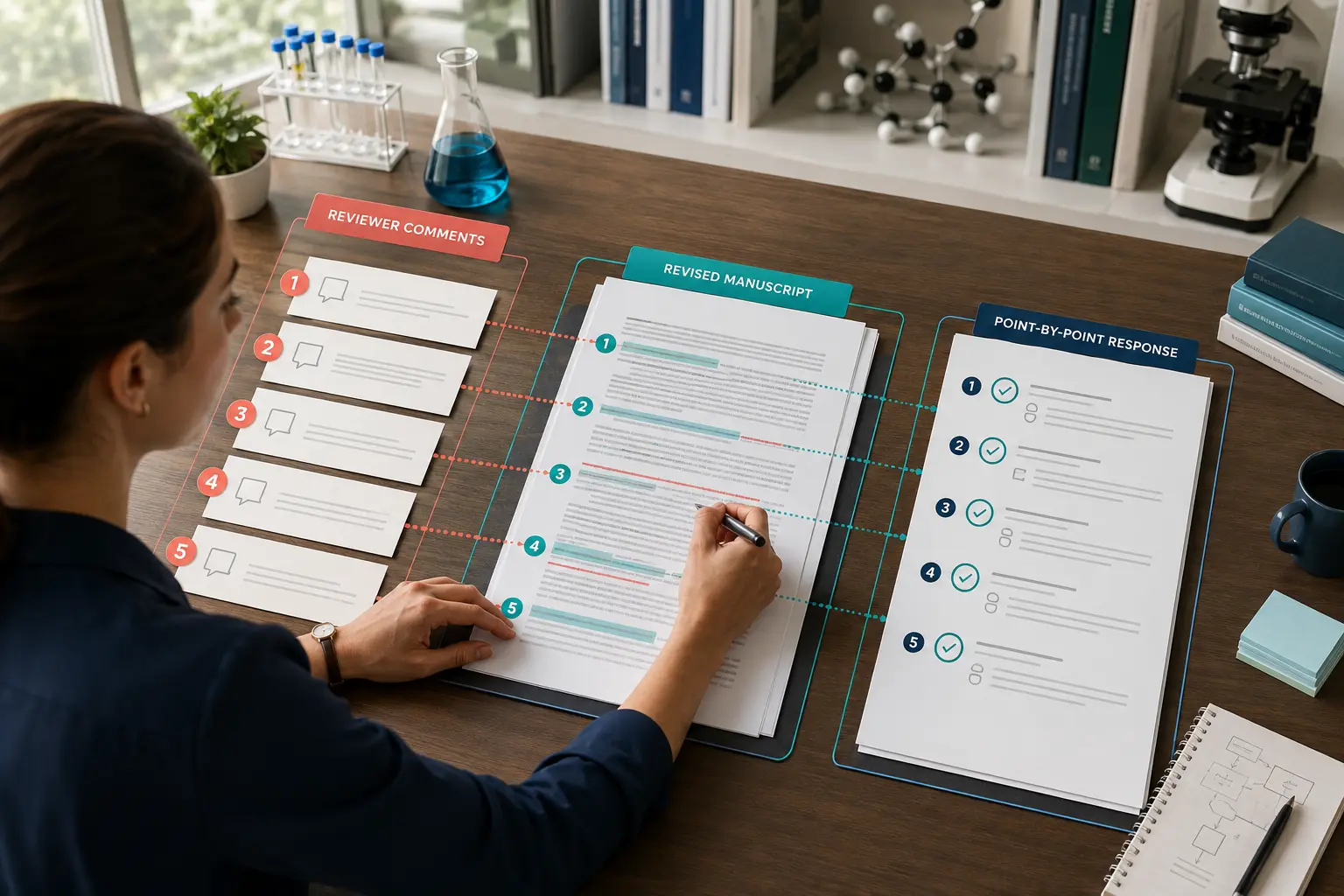 Research Publication
Response to Reviewers Template: How to Answer Journal Comments Point by Point
A response letter should let an editor verify every revision without searching the manuscript. This point-by-point method separates the reviewer’s request, the author’s decision, the exact change and its location.
Read the article →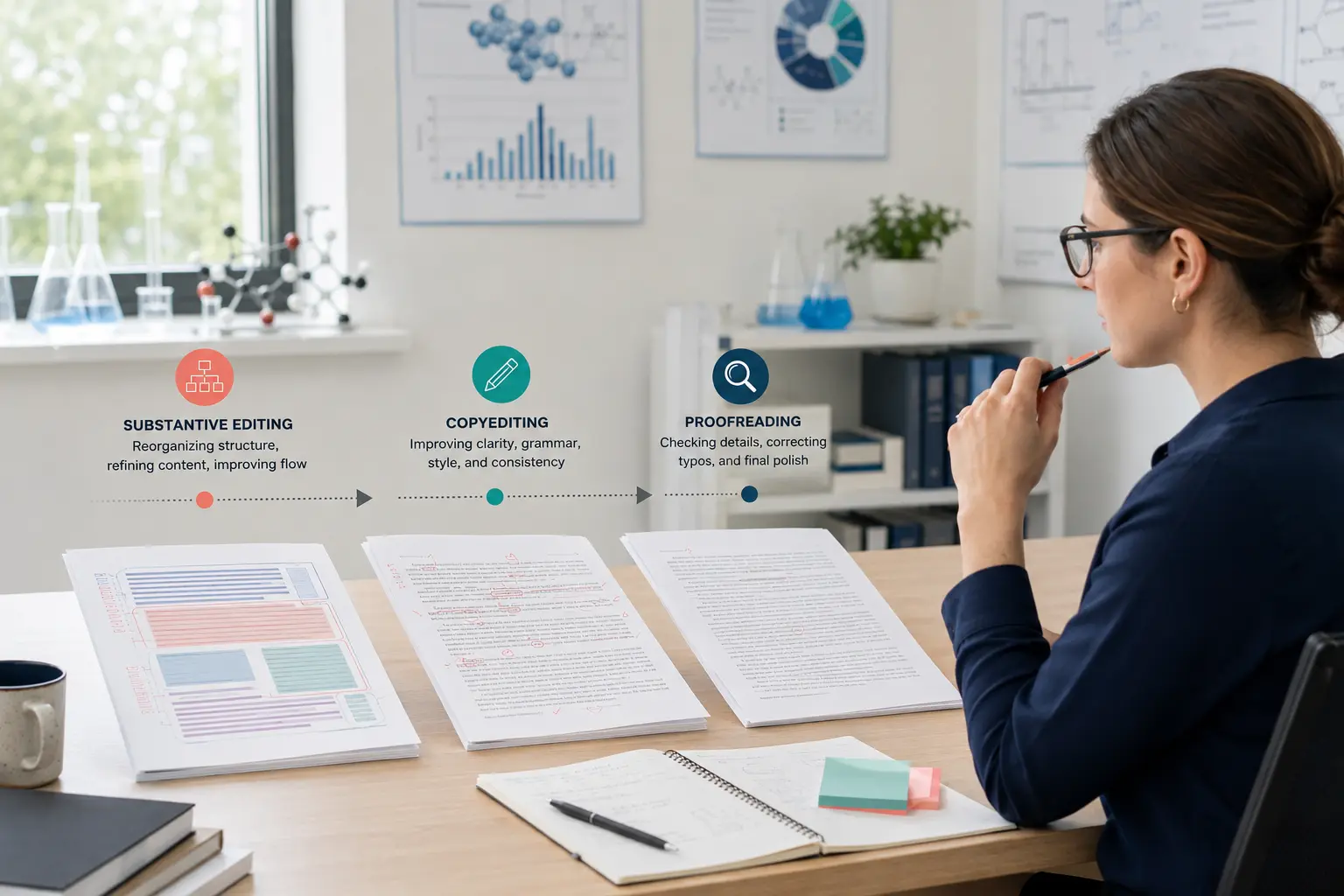 Academic Editing
Substantive Editing vs Copyediting vs Proofreading: Which Does a Research Paper Need?
A research paper can be grammatically clean and still be difficult to publish because editing levels solve different problems. Diagnose the manuscript first, then choose substantive editing, copyediting or proofreading in the correct order.
Read the article → Chemical Engineering
Lab Scale vs Pilot Scale vs Commercial Scale: What Evidence Supports a Credible Performance Claim?
Laboratory, pilot and commercial-scale studies answer different questions. Laboratory work can establish mechanism and controlled performance; pilot testing examines integration and real variability; commercial operation demonstrates site-level reliability, maintainability and economics over a defined period.
Read the article → Technical Content Strategy
Technical Case Study Template for Engineering Companies: From Baseline to Measured Result
A credible engineering case study does more than describe a project and present a favourable percentage. It defines the original operating condition, explains exactly what changed, shows how the result was measured and states where the evidence can and cannot be transferred.
Read the article → Academic Ethics
AI-Assisted Academic Editing: Where Ethical Support Ends and Authorship Begins
Ethical AI-assisted academic editing can improve language, structure and consistency while the researchers retain the ideas, evidence, analysis, decisions and final responsibility. The boundary is crossed when AI creates undisclosed intellectual contributions, invents sources or results, performs unverified analysis, or replaces the accountable judgement required from human authors.
Read the article →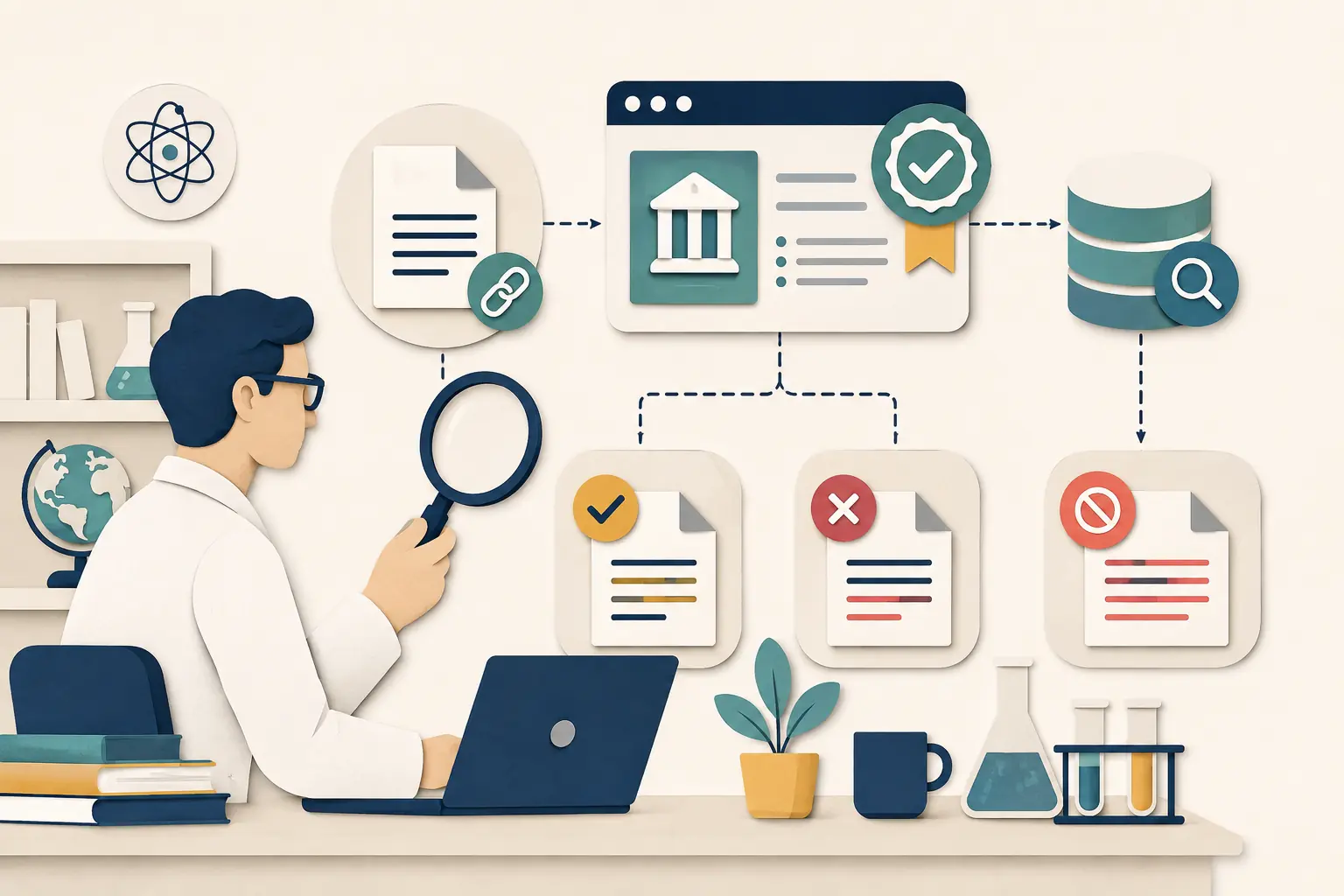 Research Integrity
How to Check Whether a Scientific Paper Has Been Corrected or Retracted
To check whether a scientific paper has been corrected or retracted, begin with its DOI, open the current publisher record, inspect any Crossmark status and follow linked correction, expression-of-concern or retraction notices. Then verify the record through Crossref or Retraction Watch. A PDF saved earlier may remain unchanged even after the scholarly record has been updated.
Read the article → Biotechnology Content
Biotech White Paper Writing: How to Build Trust With Scientists and Procurement Teams
Biotech white paper writing should organise scientific evidence so technical reviewers can judge the claim and procurement teams can evaluate adoption risk. A useful paper connects the tested model, process scale, operating conditions and limitations with validation needs, supplier support, total operating impact and the next practical decision.
Read the article → Water Treatment Marketing
Industrial Water Treatment Marketing: Why Technical Websites Lose B2B Buyers
Industrial water treatment marketing must connect process performance with the buyer's water matrix, operating cost, compliance target and implementation risk. Reactor parameters and removal percentages remain important, but they do not support a purchase decision until the website explains the conditions, practical consequences and evidence limits behind them.
Read the article → Academic Publishing
Journal Citation Reports 2026: How to Use Impact Factor Without Choosing the Wrong Journal
Journal Citation Reports 2026 can help researchers compare journals within a defined disciplinary context, but Journal Impact Factor should remain a screening measure rather than a final submission rule. A suitable journal must also match the manuscript's subject, evidence level, article type, readership, editorial model and realistic publication requirements.
Read the article → Academic Publishing
Why a Journal Is Placed On Hold in Web of Science and What Authors Should Check Before Submission
A journal marked On Hold in the Web of Science Master Journal List is undergoing re-evaluation. The label is not a final finding of misconduct, but new content is not processed for indexing during the review. Authors should verify the live status, examine the journal's editorial conduct and decide whether the indexing uncertainty is acceptable before submission.
Read the article →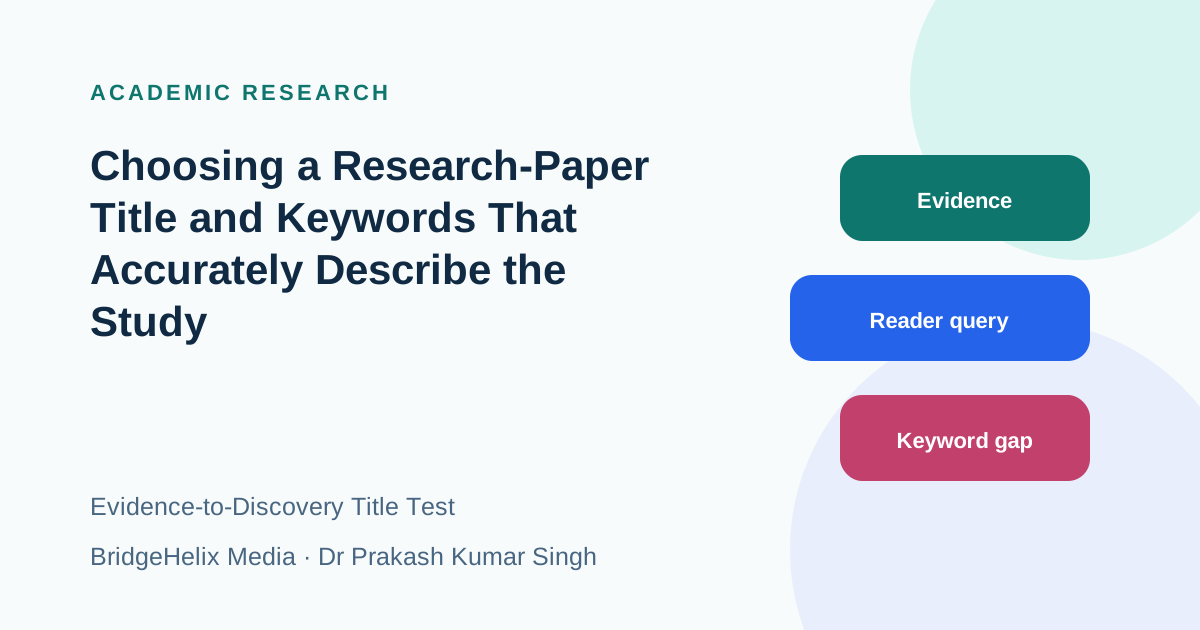 Academic Research
Choosing a Research-Paper Title and Keywords That Accurately Describe the Study
Learn how to choose a research paper title using an evidence-led framework, worked example, comparison and practical quality-control checklist.
Read the article → Technical Marketing
How to Build Topic Clusters for Biotech, Water Treatment and Engineering Companies
Learn technical SEO content strategy using an evidence-led framework, worked example, comparison and practical quality-control checklist.
Read the article → Technical Marketing
Keyword Research for Technical B2B Markets Where Search Volume Is Low but Purchase Value Is High
Learn technical B2B keyword research using an evidence-led framework, worked example, comparison and practical quality-control checklist.
Read the article → Academic Research
Results Versus Discussion: Where Should Interpretation, Comparison and Limitations Appear?
Learn results vs discussion in research paper using an evidence-led framework, worked example, comparison and practical quality-control checklist.
Read the article →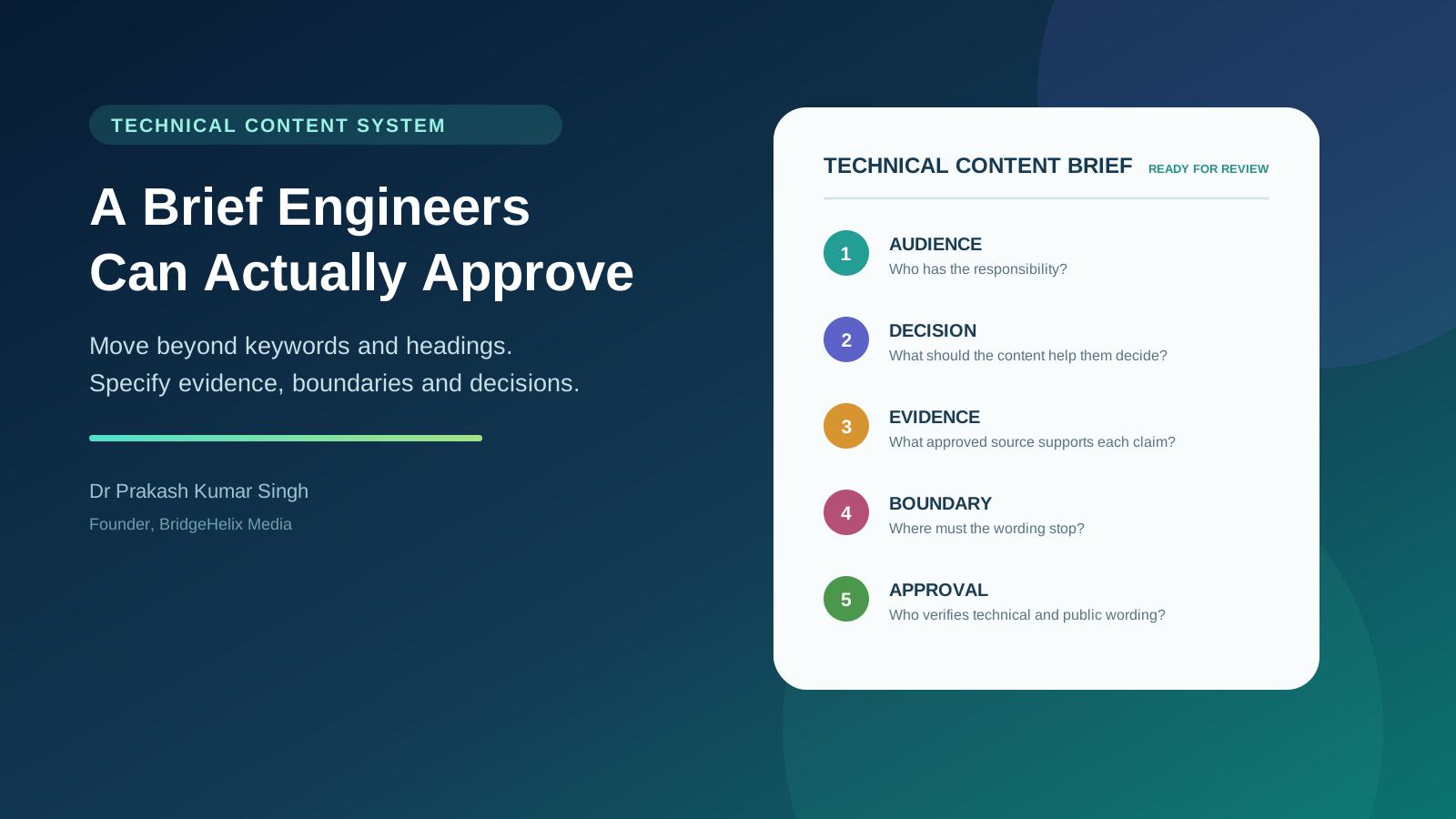 Technical Marketing
How to Create a Technical Content Brief That Engineers and Scientists Can Actually Approve
A technical content brief should function as a decision and evidence specification, not a keyword sheet followed by a list of headings.
Read the article →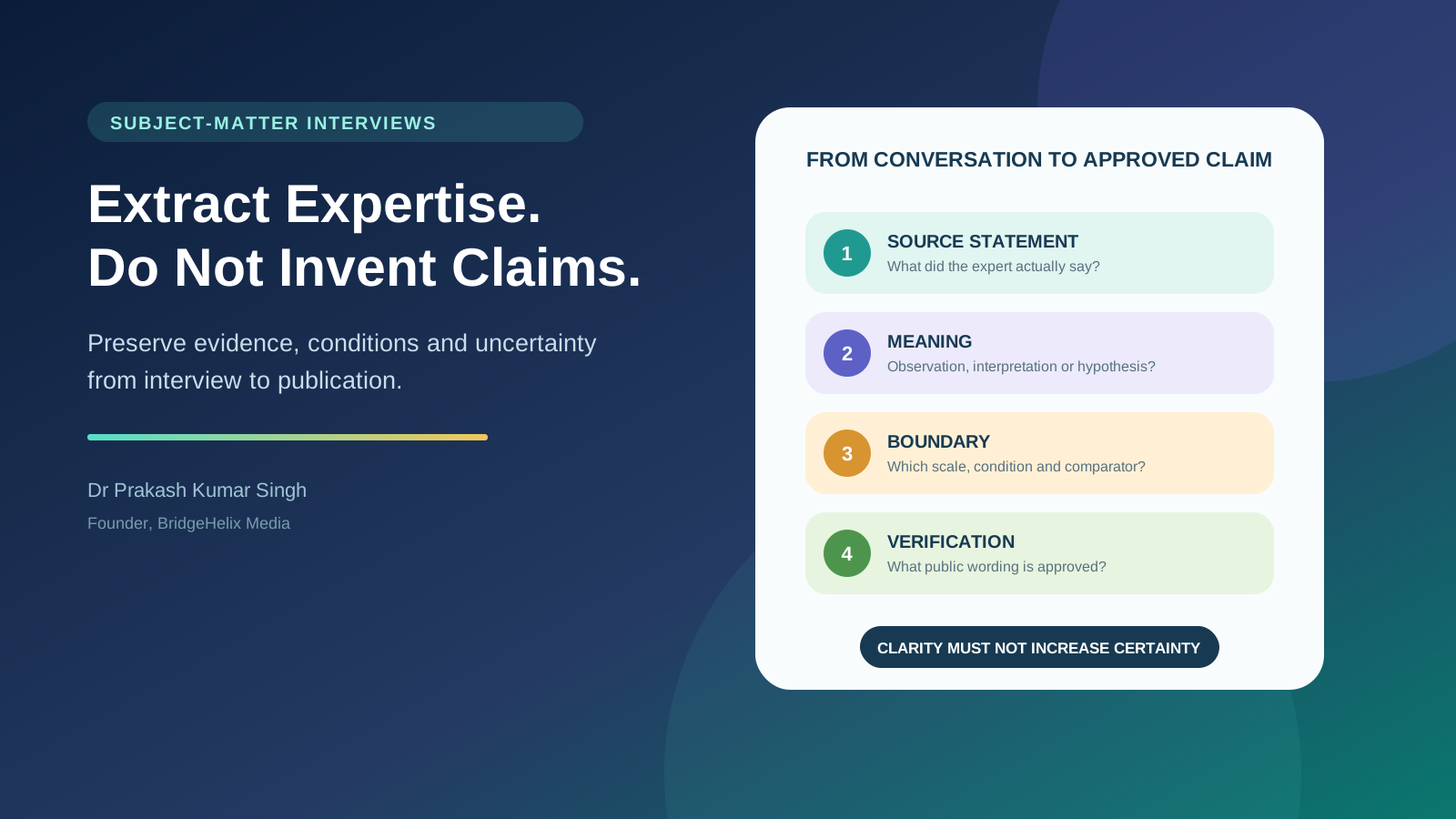 Technical Marketing
How to Interview Scientists and Engineers Without Inventing Claims They Never Made
A useful expert interview captures not only what a technology does, but under which conditions the statement is true and what evidence would justify stronger wording.
Read the article →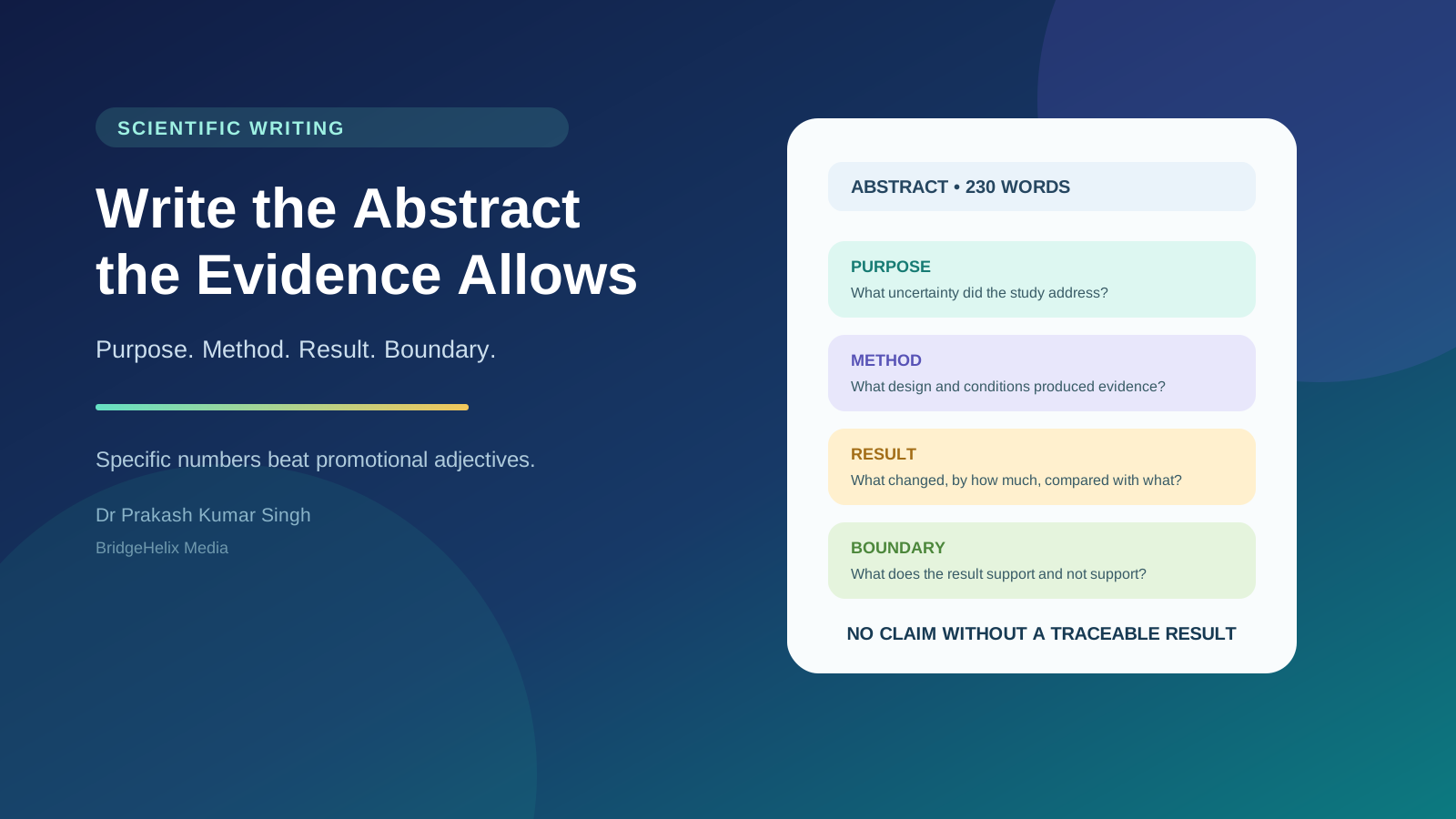 Academic Research
How to Write a Scientific Abstract That Reports Evidence Without Exaggerating the Result
A strong scientific abstract is a compact evidence trail, not a promotional summary that makes the completed study appear broader than it was.
Read the article →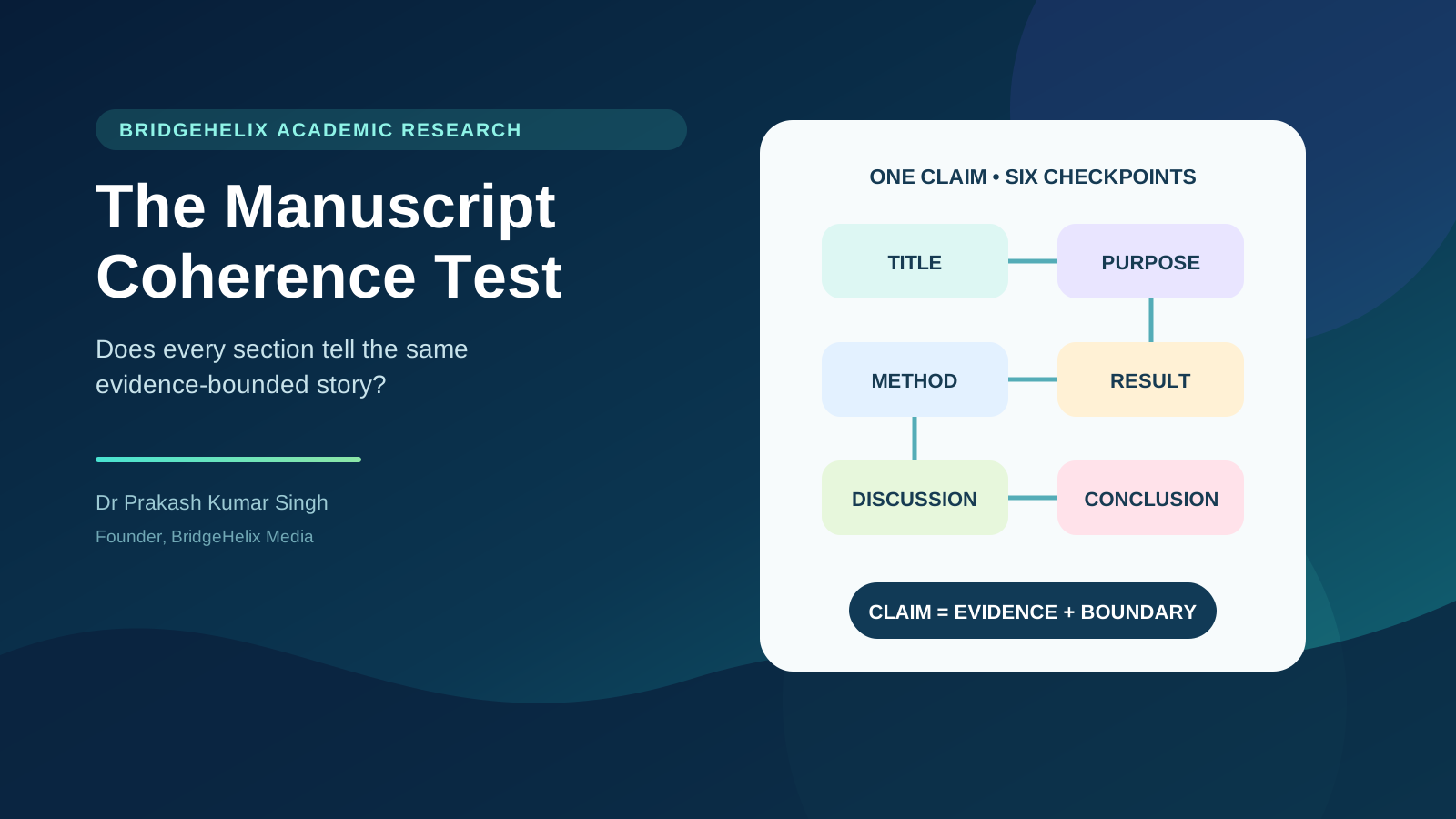 Academic Research
The Manuscript Coherence Test: Do the Abstract, Methods, Results and Conclusion Tell the Same Story?
A manuscript is coherent when its main claim can be traced from the research question through the method and results to a conclusion that stays within the evidence.
Read the article →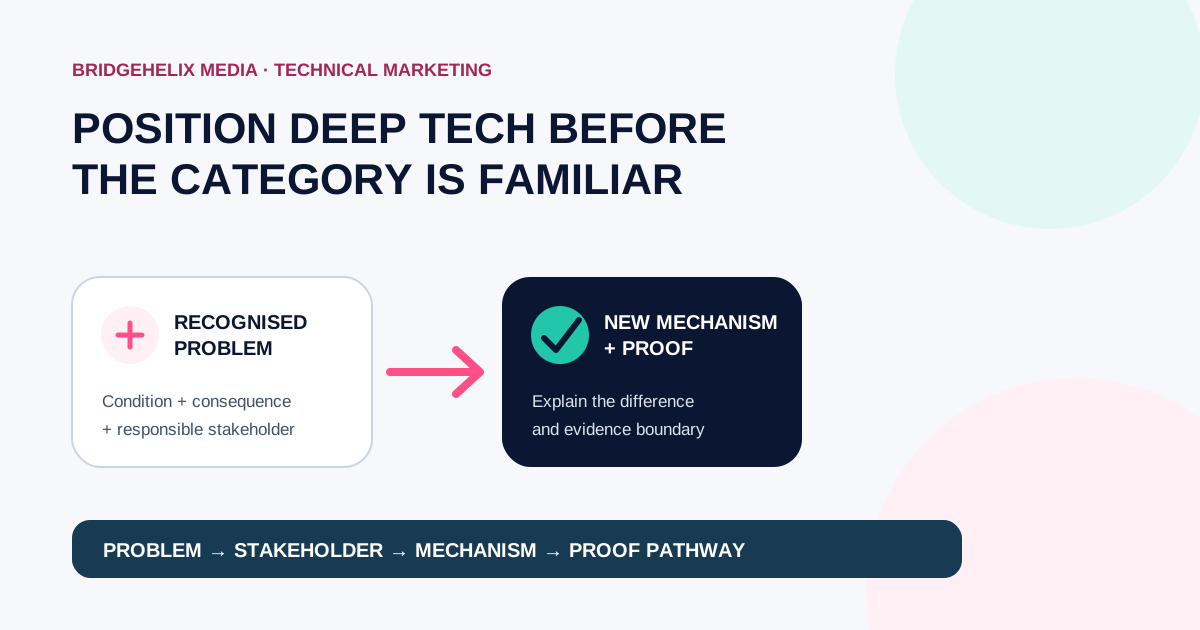 Technical Marketing
How to Position a Deep-Tech Startup Before the Market Understands the Category
An unfamiliar technology category should not force the buyer to learn a new vocabulary before understanding the problem, mechanism and evidence.
Read the article →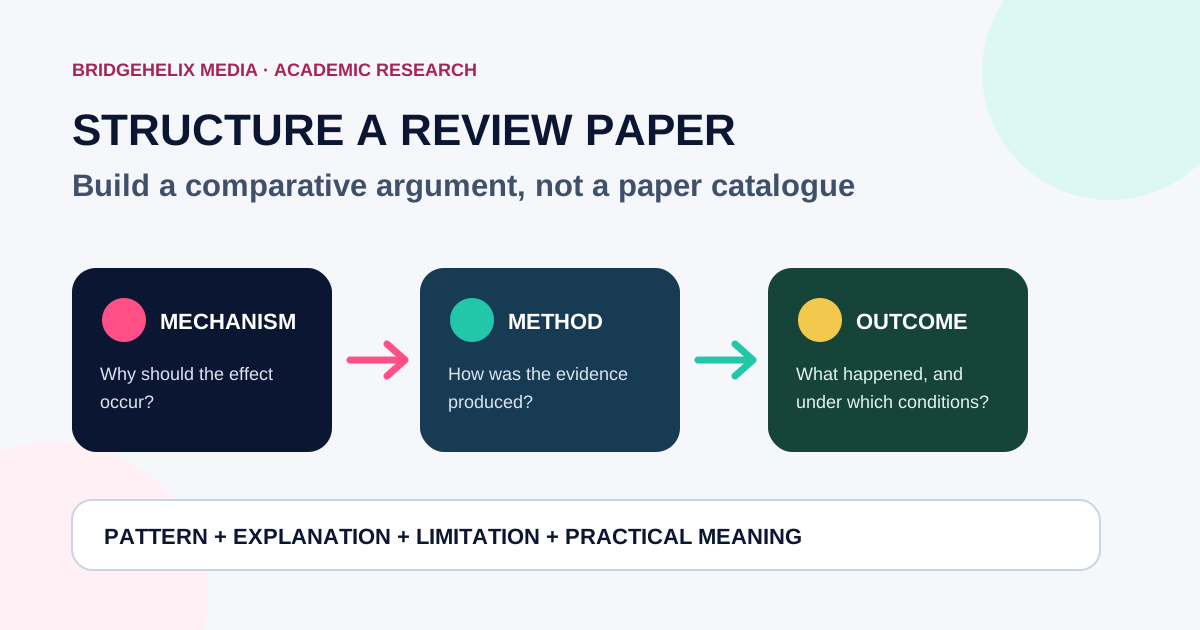 Academic Research
How to Structure a Review Paper Around Mechanisms, Methods and Outcomes
A strong review paper is organised by the questions the evidence must answer, not by a sequence of authors or publication dates.
Read the article →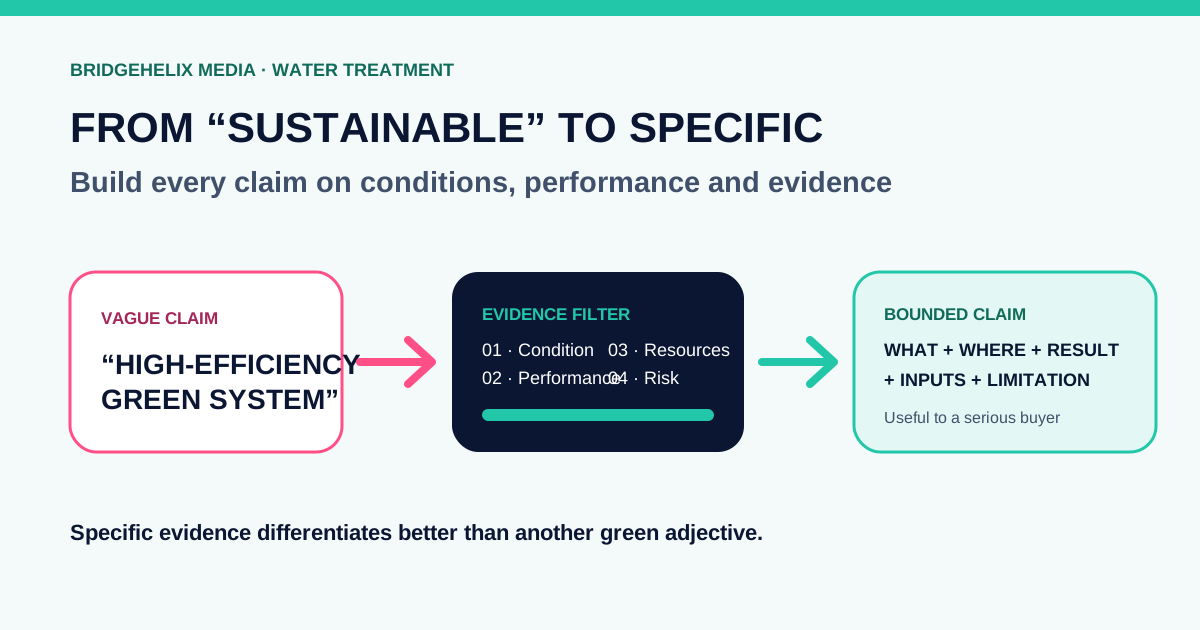 Technical Marketing
Water-Treatment Content Marketing Without Generic Sustainability Claims
Water-treatment buyers need to know what a technology removes, under which conditions, with what resource demand and at what evidence level.
Read the article →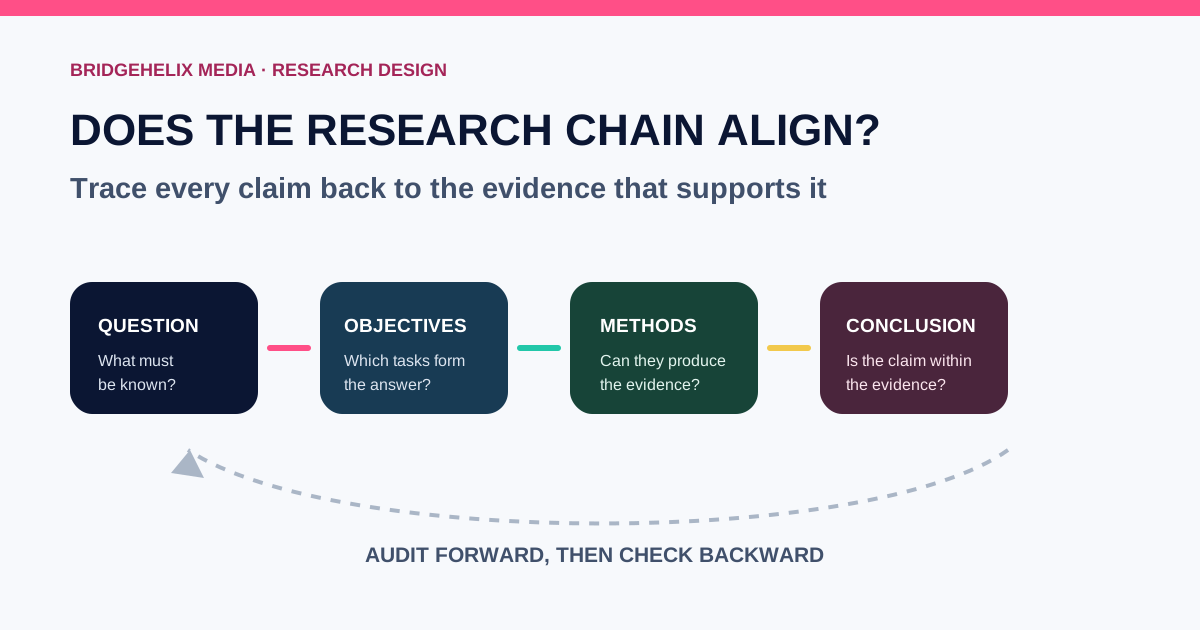 Academic Research
When Research Questions, Objectives and Methods Do Not Align
A study is coherent when every objective produces evidence needed to answer the research question and every conclusion remains within that evidence.
Read the article →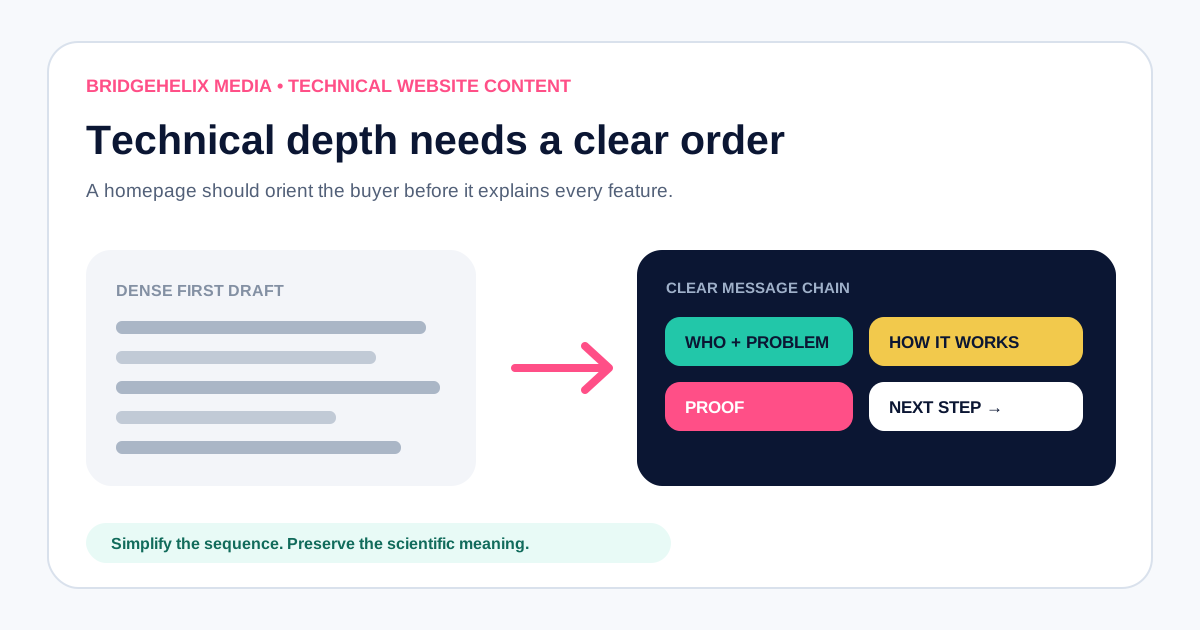 Technical Marketing
Homepage Messaging for Biotech, Engineering and Scientific Companies: A Practical Clarity Framework
A technical homepage should not explain the whole technology. It should help the right buyer recognise the problem, understand the mechanism, see credible proof and choose the next step.
Read the article →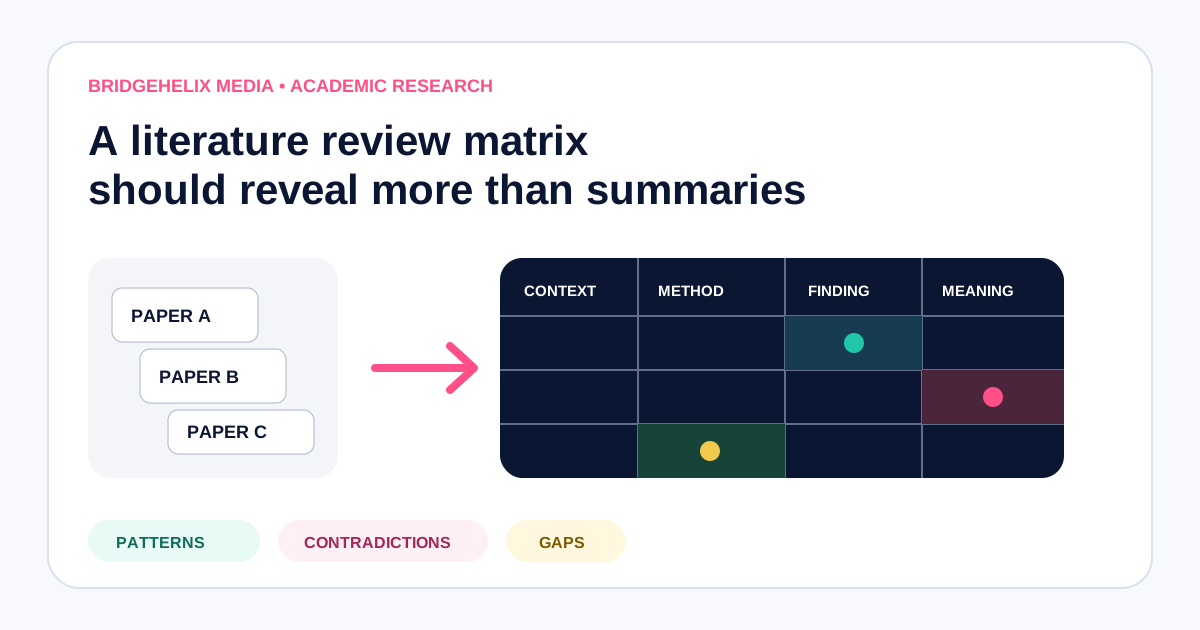 Academic Research
How to Build a Literature Review Matrix That Reveals Patterns, Contradictions and Gaps
A useful literature review matrix does more than store citations. It makes studies comparable, exposes contradictions and helps the writer build an evidence-led argument.
Read the article →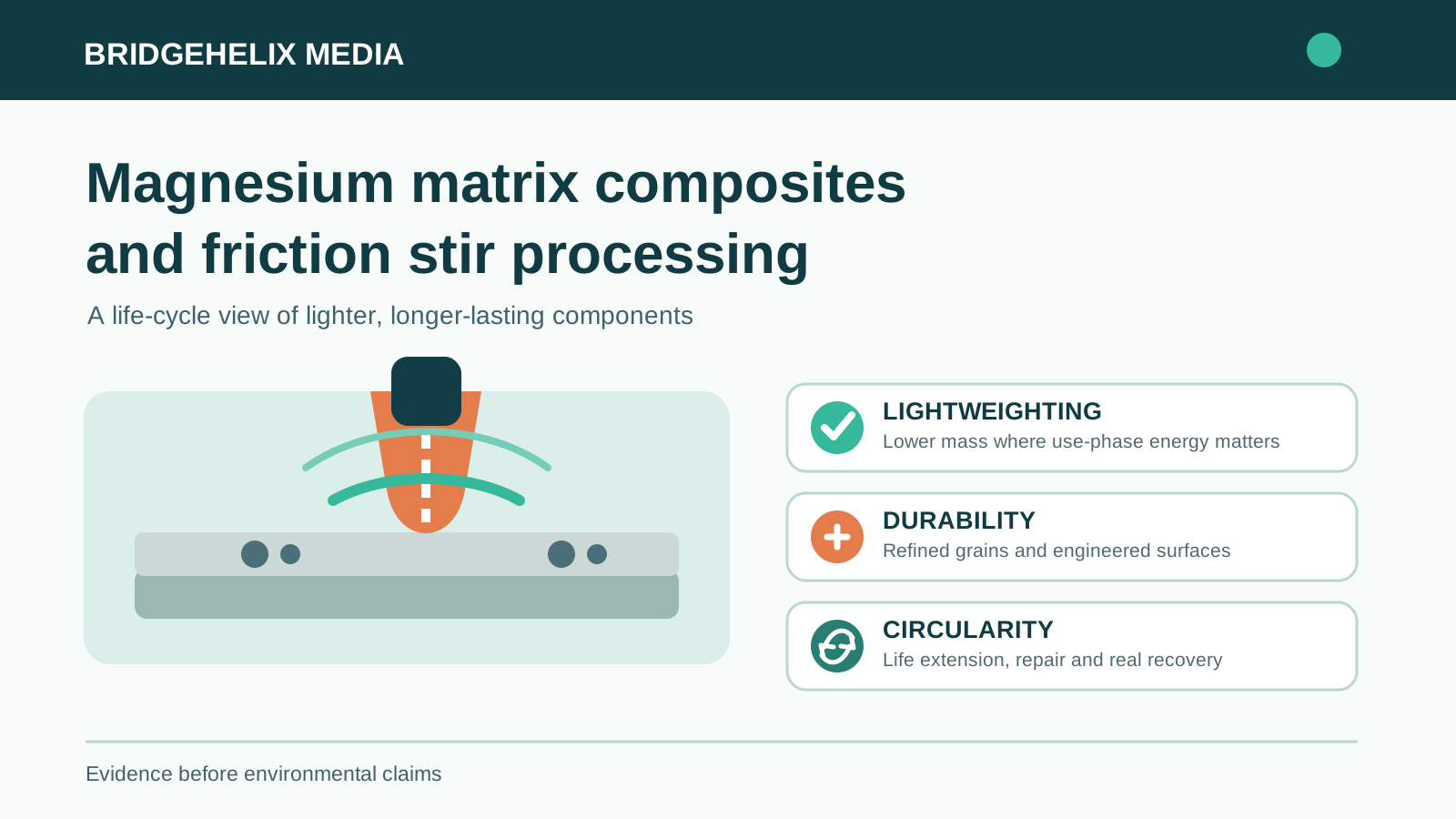 Materials Science
Magnesium Matrix Composites and Friction Stir Processing: Can They Support More Sustainable Manufacturing?
Magnesium matrix composites and friction stir processing can contribute to lighter, longer-lasting components, but their sustainability depends on the complete material and product life cycle.
Read the article →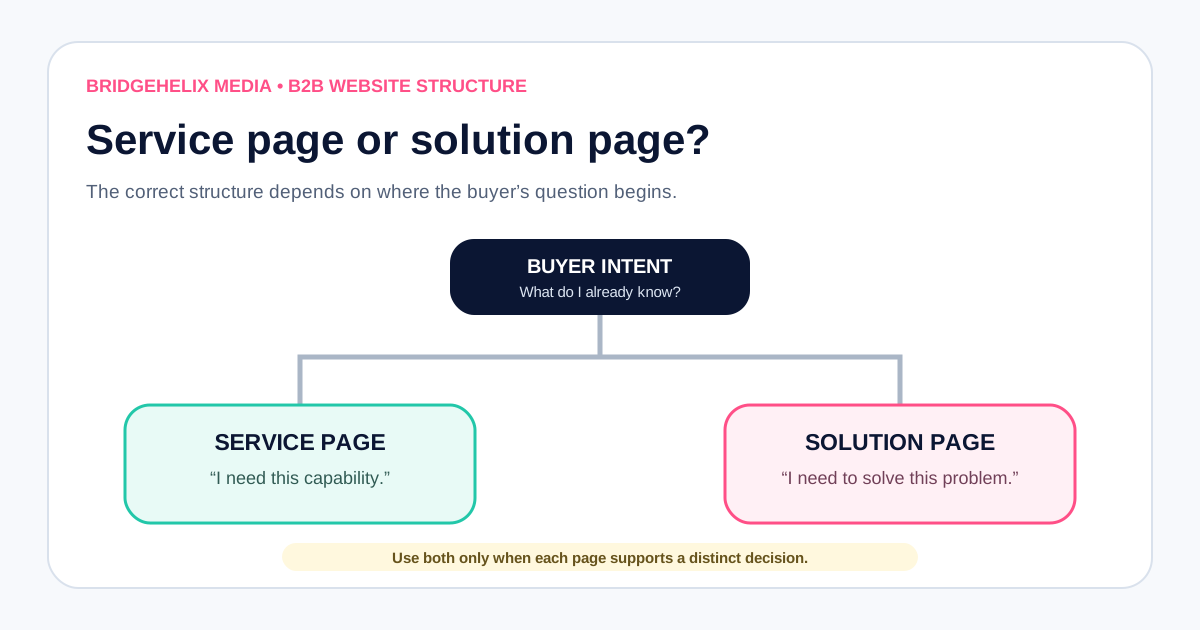 Technical Marketing
Service Page or Solution Page? Choosing the Right Structure for Complex B2B Offerings
A service page explains what the provider does. A solution page explains how several capabilities address a defined buyer problem. Complex B2B websites often need both, connected without duplicating the same copy.
Read the article →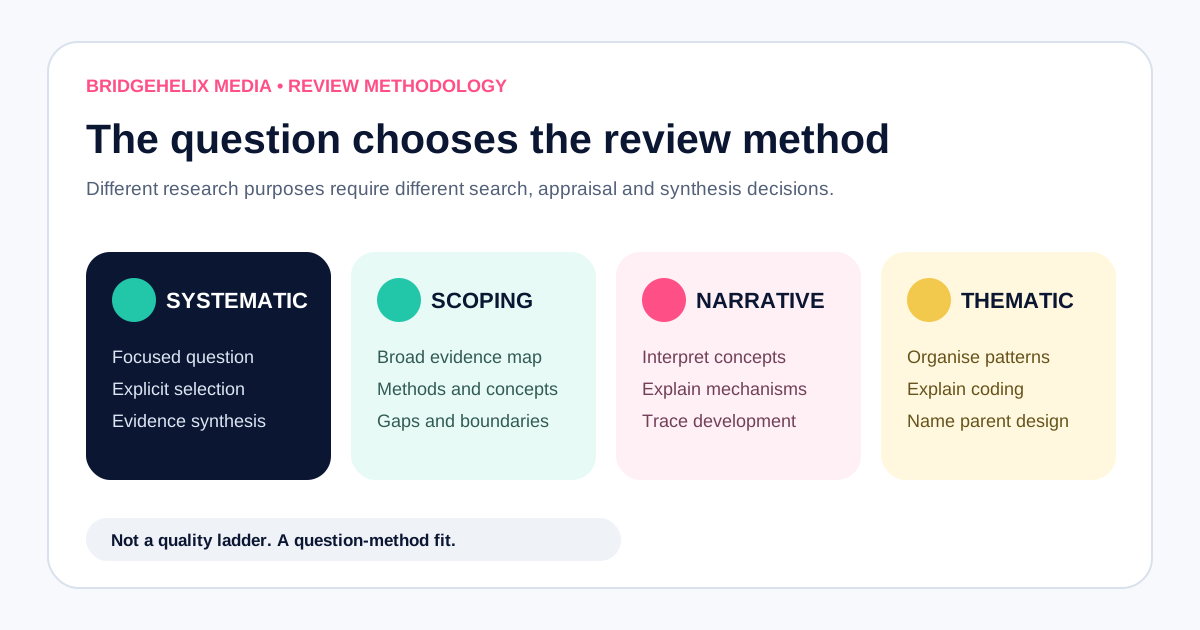 Academic Research
Systematic, Scoping, Narrative or Thematic Review: Which Method Fits Your Research Question?
Review methods are not a hierarchy from weak to strong. The correct choice depends on whether the study must estimate an effect, map a field, explain a debate or organise evidence by theme.
Read the article →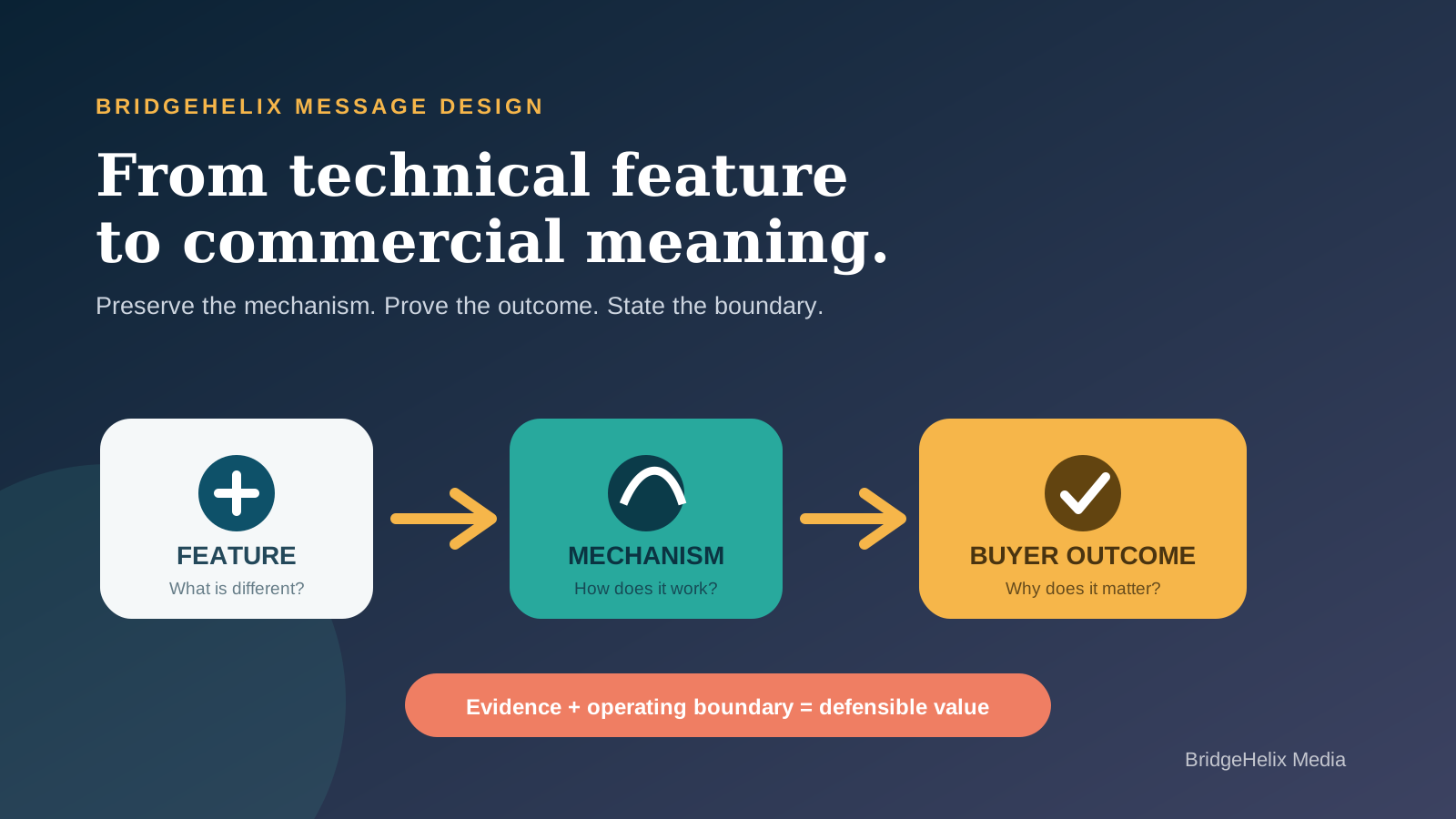 Technical Marketing
From Technical Feature to Commercial Meaning: How to Build a Defensible Value Proposition
A strong technical value proposition does not remove the science. It connects a verified feature to a relevant outcome, shows the supporting evidence and states where the claim applies.
Read the article →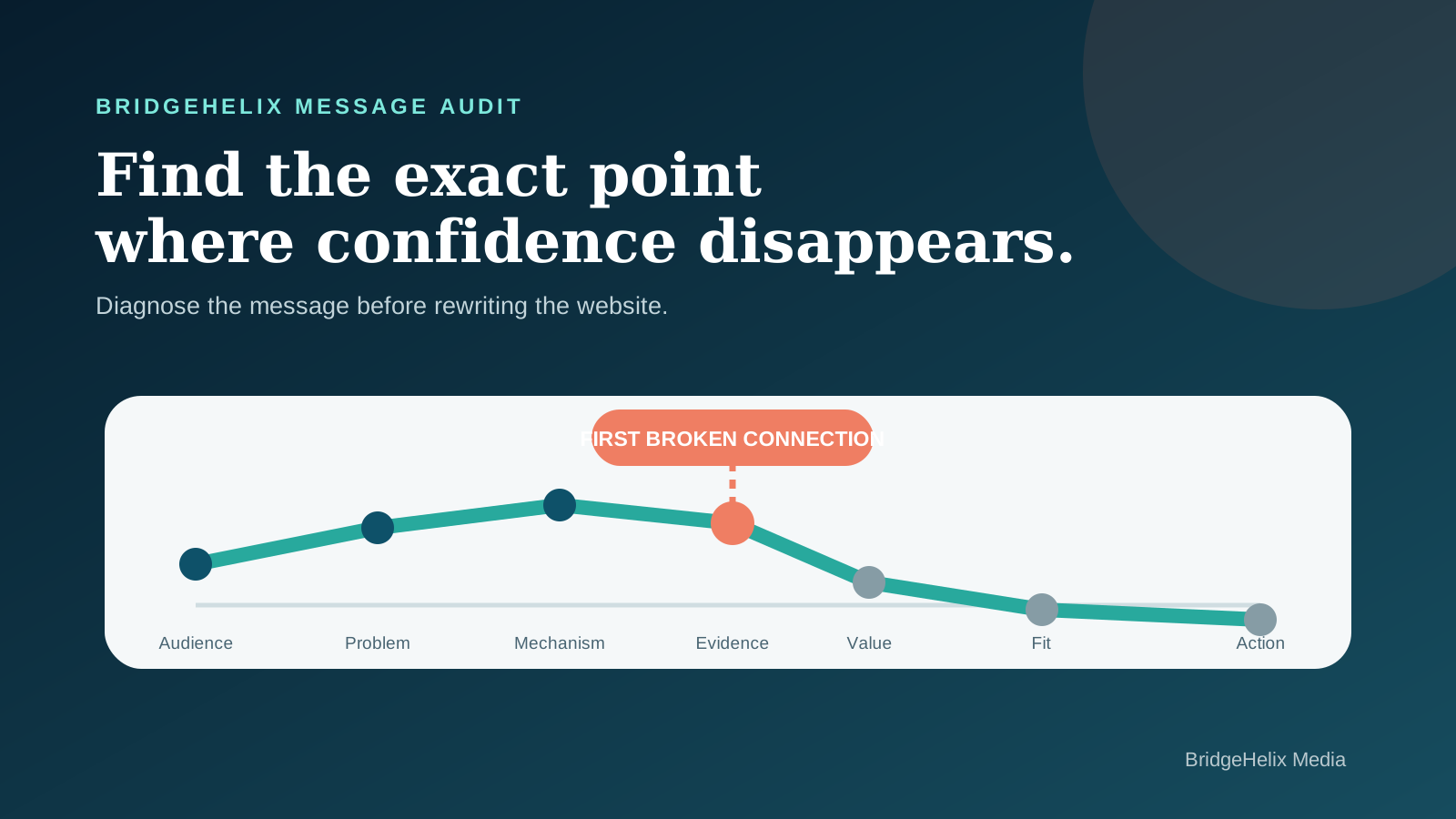 Technical Marketing
Technical Messaging Audits: Finding the Exact Point Where Buyer Confidence Disappears
A technical website can be accurate and still make the buyer work too hard. A messaging audit identifies the first broken connection between the buyer's problem, the mechanism, the proof and the next action.
Read the article →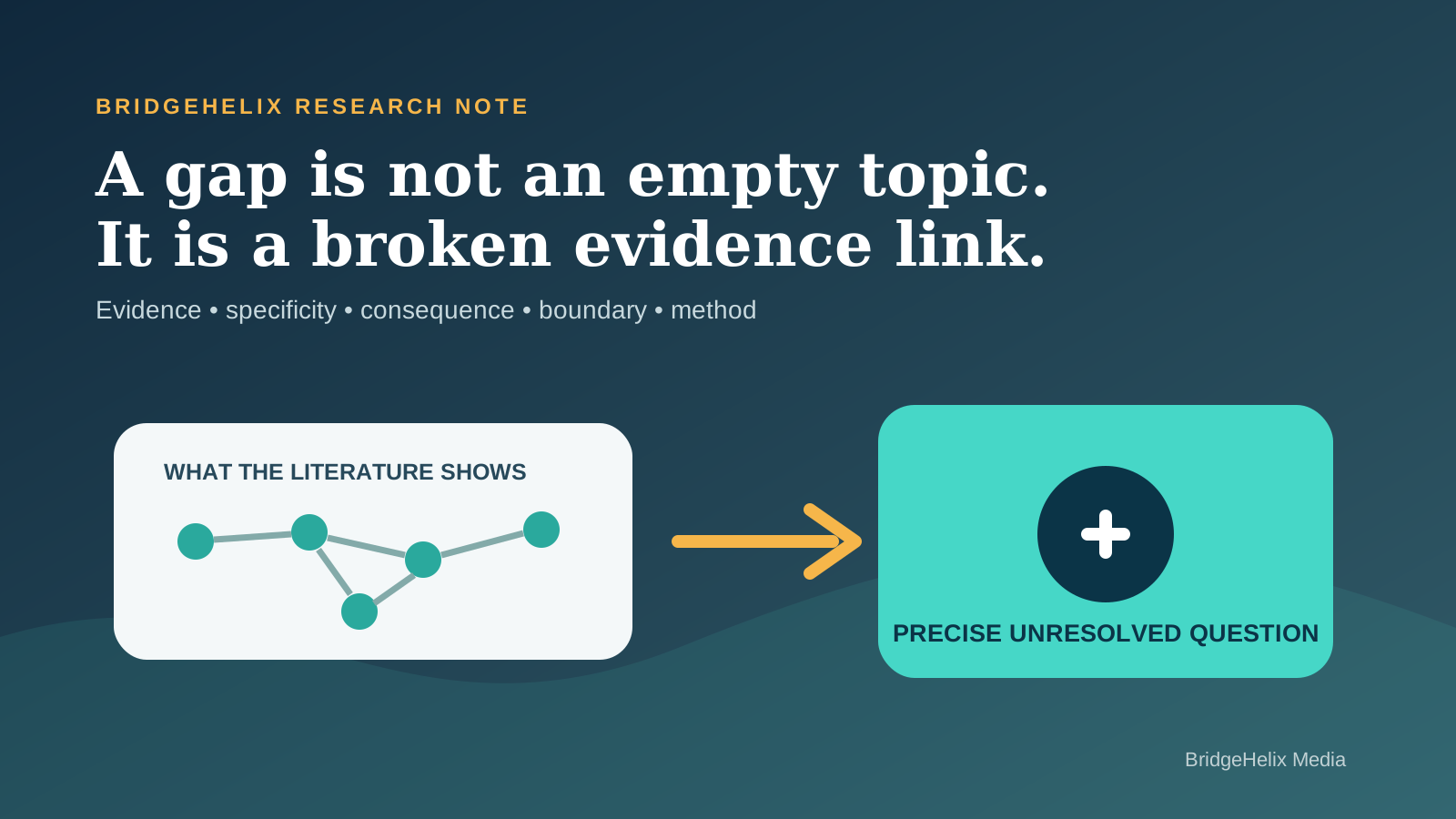 Academic Research
What Counts as a Defensible Research Gap?
A research gap is not simply a topic with fewer papers. It is a specific limitation in existing knowledge that changes what can be explained, predicted or applied.
Read the article →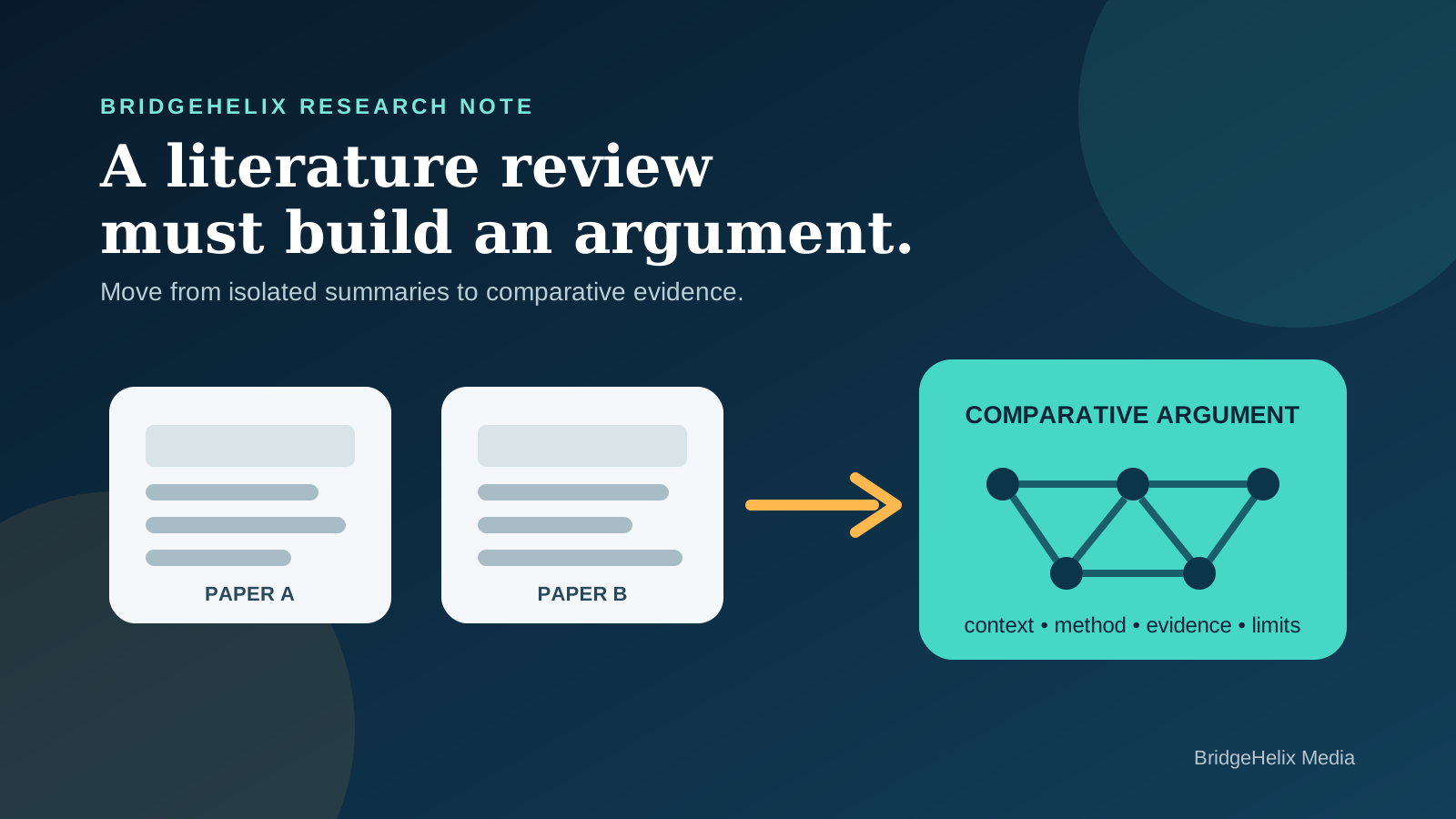 Academic Research
Why Literature Reviews Become Paper Catalogues and How to Build a Comparative Argument
A useful literature review does not prove how many papers you have read. It explains what the evidence collectively shows, why studies disagree and what remains unresolved.
Read the article → AI search & SEO
How to Optimise Content for Google AI Search in 2026
Google does not require a special AI-search shortcut. Strong SEO foundations, useful content and clear evidence still matter.
Read the article → Research support
Ethical Academic Content Support for Researchers
Ethical support improves how research is communicated while keeping intellectual decisions and authorship with the researcher.
Read the article → SEO content
How to Turn Research Into SEO-Friendly Content
A paper and a web article may use the same evidence, but they organise it for different questions and reading situations.
Read the article → Science communication
Scientific Blog Writing: How to Make Research Readable
Readable scientific writing reduces unnecessary friction while keeping the mechanism, evidence and uncertainty connected.
Read the article → Technical Marketing
Technical Content Writing: A Practical Guide for Complex B2B Companies
A practical guide to technical content writing for engineering, scientific and technology companies, with a mechanism–evidence–decision framework.
Read the article → Messaging
Technical Messaging Audit: Signs Your Website Needs One
A messaging audit is useful when technical strength is present but buyers still cannot explain the offer, evidence or next step.
Read the article → Science communication
The Difference Between Simplifying and Oversimplifying Science
Simplifying removes friction. Oversimplifying removes the information that changes interpretation.
Read the article → White papers
White Paper Writing for Technical Companies
A technical white paper should help a serious reader examine a difficult decision, not stretch promotional copy across more pages.
Read the article → Messaging
Why Technically Strong Websites Fail to Explain Value
A website can be technically accurate and commercially unclear when it begins with internal language and asks the buyer to interpret the value.
Read the article →Start with clarity
Need content built around your own expertise?
Share the deliverable, audience, approximate scope and deadline. We will recommend the most useful route before work begins.
Get a Project Quote ↗